
Arrest Warrants in Dakota County
Minnesota law controls the paperwork. Section 625.03 governs an arrest warrant issued after examination where just cause exists. The order recites the substance of the complaint and directs an officer to apprehend the person and bring them before the court. Getting there takes a charging decision first. In Dakota County, the County Attorney reviews the complaint and a judge signs the warrant. The case then enters the District Court system. Section 629.30 gives officers their arrest authority.
Dakota County Warrant Questions in Your Name
A relative calls with a question. A court letter or an unpaid citation can start the same worry, and the steps in Dakota County run in a fixed order.
- Search the county warrant page and the state court records system with the full legal name and birth date.
- Look up the complaint by name or date posted to see whether charges were filed in the past year.
- Call Court Administration at 651-377-7180 to confirm whether a warrant sits on the case and under what conditions.
- Contact an attorney before arranging a surrender, so the timing matches the next court calendar.
Note: A name that matches is not a person that matches, so a date of birth belongs in every check.
What a Dakota County Arrest Warrant Contains
A Dakota County warrant document carries the identifiers that tie an order to a case and a person. The complaint holds the alleged facts.
| Named Subject | The person the order directs officers to bring before the court |
|---|---|
| Charge or Offense | The offense described in the complaint supporting the warrant |
| Issuing Judge | The judge who signed the order after reviewing the complaint |
| Court | Dakota County District Court, First Judicial District |
| Release Conditions | A bail amount where the court set one, or Body Only where custody comes first |
Charges and alleged facts live in the complaint record. The state court system's Register of Actions holds that file and its attached documents.
Dakota County Complaint and Warrant Searches
Dakota County publishes two different search tools, and a result in one says little about the other.
| Point | Criminal Complaint Search | Warrant Search |
|---|---|---|
| What it shows | Complaints filed by the County Attorney | Warrant entries published by the Sheriff's Office |
| Search fields | Last name, first name, date range | Last name, first name, date of birth |
| Coverage | Complaints posted in the previous 12 months | County warrant entries, with no completeness statement |
| Exclusions | Criminal sexual conduct and child sexual-abuse image complaints | Confidential or sealed data under state law |
The County Attorney's complaint search is the official route for the charging document itself.
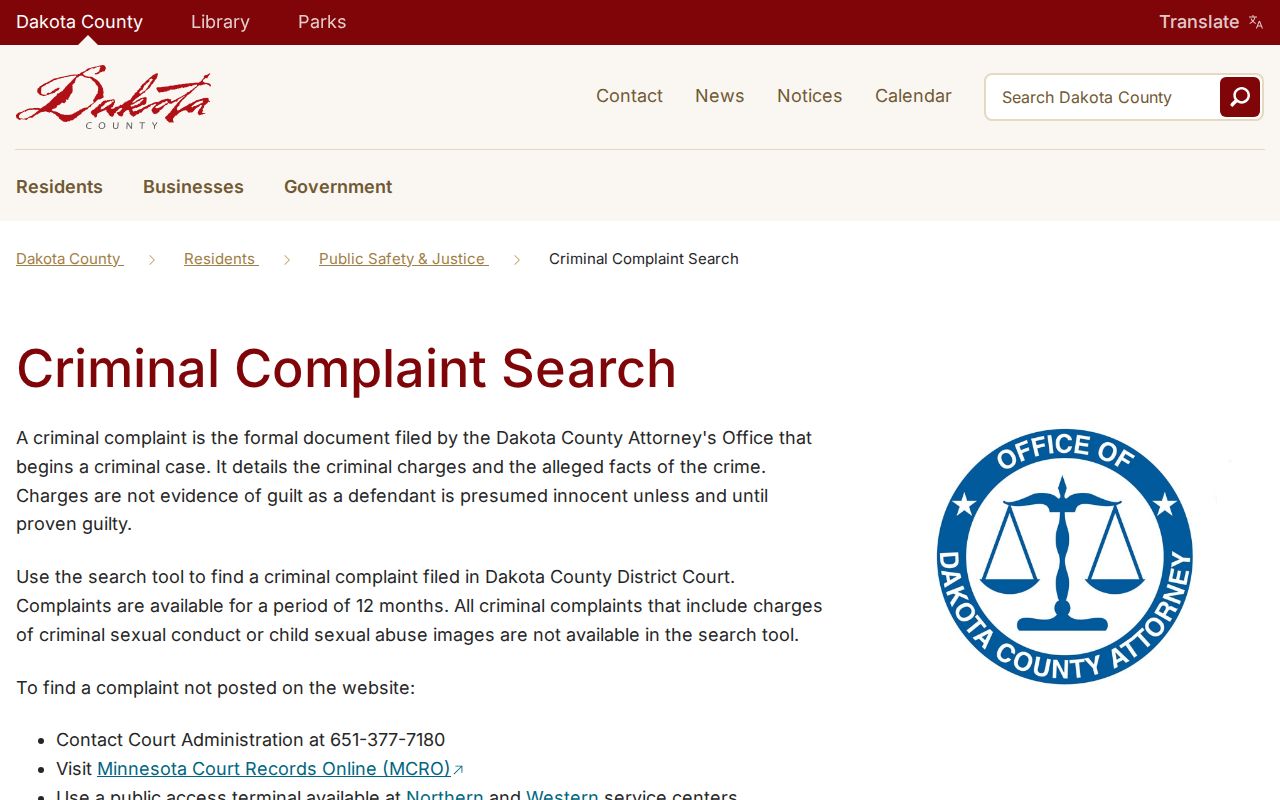
The tool searches by name and posting date. It covers only the previous 12 months of filed complaints. A complaint can carry no warrant at all, and a warrant can stay open long after the complaint drops out of that 12-month window.
How Dakota County Arrest Warrants Are Served
The Sheriff's Office serves warrants across Dakota County. City police serve the ones from their own investigations. Service can happen at home, at work, during a traffic stop, or when someone walks into a courthouse on other business. The Sheriff's Office and the county jail both operate from the Law Enforcement Center at 1580 Highway 55 in Hastings. That page carries directions to the building.
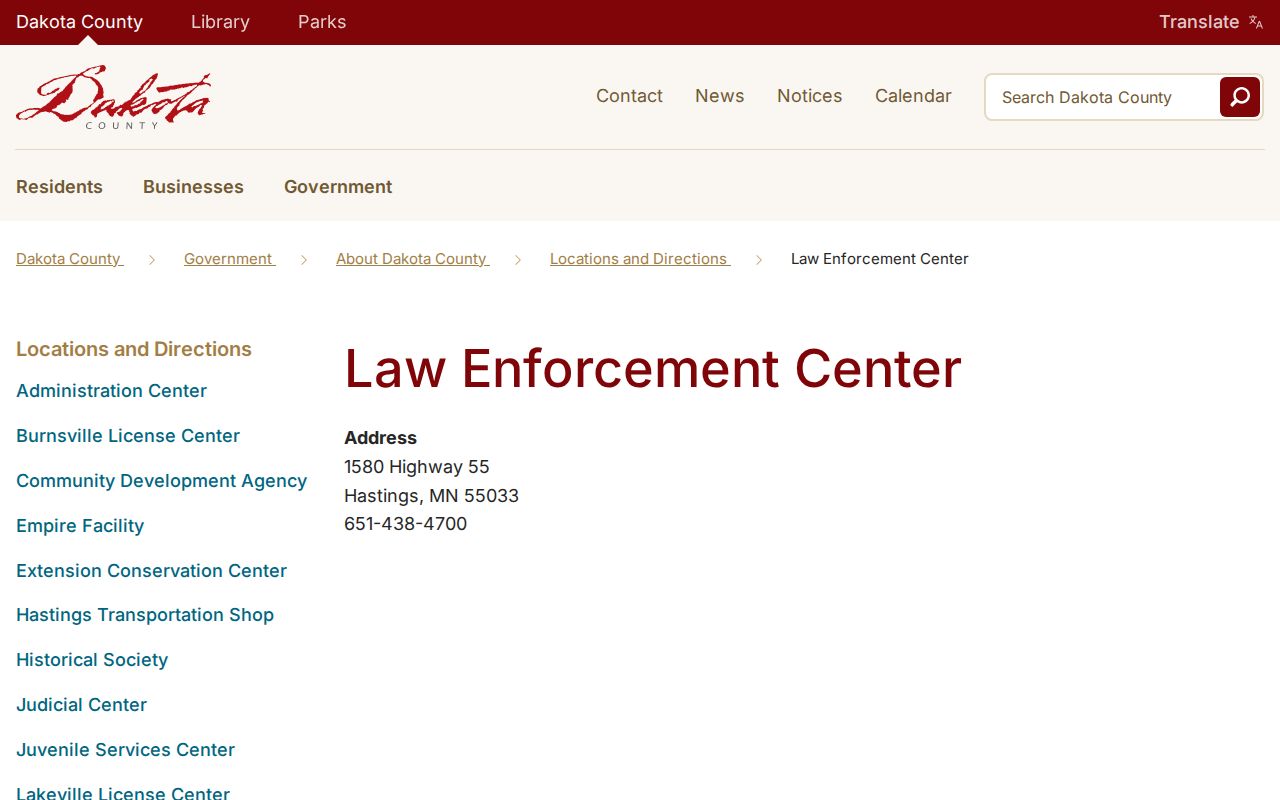
It sits across the highway from the Judicial Center at 1560. Courthouse and custody business happen a short walk apart. Booking follows an arrest. Identification, fingerprinting, and photographs all take time. Someone held on a Dakota County charge may pay bail, post bond, appear before a judge, or wait for the next court calendar. Out-of-county cases work differently. A person arrested on another county's warrant can use bail only where that warrant allows it, and only while in Dakota County custody.
Note: The county advises that a website entry alone never justifies an arrest, and officers confirm through the prescribed NCIC process first.
Dakota County Complaint Search and Warrants
The county's Criminal Complaint Search posts complaints filed in the previous 12 months. It wants a last name, a first name, and a date range in month, day, year form. One field is enough. Two categories never appear publicly: criminal sexual conduct complaints and complaints involving child sexual-abuse images. Dakota County routes missing complaints to Court Administration at 651-377-7180. The state court records system and the public terminals at the Northern and Western Service Centers also carry them. Use complaints for context. A complaint posting still does not confirm any warrant.
Arrest Warrant vs Summons vs Bench Warrant
Three instruments can summon a person to a Dakota County court, and each calls for a different response.
| Feature | Arrest Warrant | Summons | Bench Warrant |
|---|---|---|---|
| What it orders | Custody and production before the court | An appearance on a set date | Custody for a missed obligation |
| Basis | Probable cause of an offense | A charge that does not require custody | Failure to appear or comply |
| Who issues it | A judge, on complaint or affidavit | The court or a charging officer | The judge holding the case |
| How to respond | Surrender, bond, or counsel | Show up on the date | Appear or ask for a recall |
Dakota County Warrants and Complaint Allegations
Start with the complaint. That paper opens a criminal case in Dakota County. It lists the charged offenses and the alleged facts behind them. The county states plainly that allegations are not evidence. Families who pull a complaint online sometimes read it as a verdict, and it is not one. The warrant question is separate too: a complaint on file does not mean an active order exists. County Attorney news releases from 2025 use complaint-warrant language when describing how cases begin. The two documents travel together without being the same thing.
What Stays Confidential Before Service
Minnesota keeps some warrant data quiet before an arrest. Under Minnesota Statutes 13.82, arrest warrant index data stays confidential until the defendant is taken into custody, served, or appears. Early disclosure needs a public-purpose call by the agency.
Key Point: A clean county search does not clear a person. Pre-service warrant data, sealed matters, and federal cases sit outside the county page, and a federal warrant is checked separately through the U.S. District Court for Minnesota or PACER rather than through Dakota County.
The federal trial court publishes its own district page, which handles questions that sit outside the Minnesota District Court.
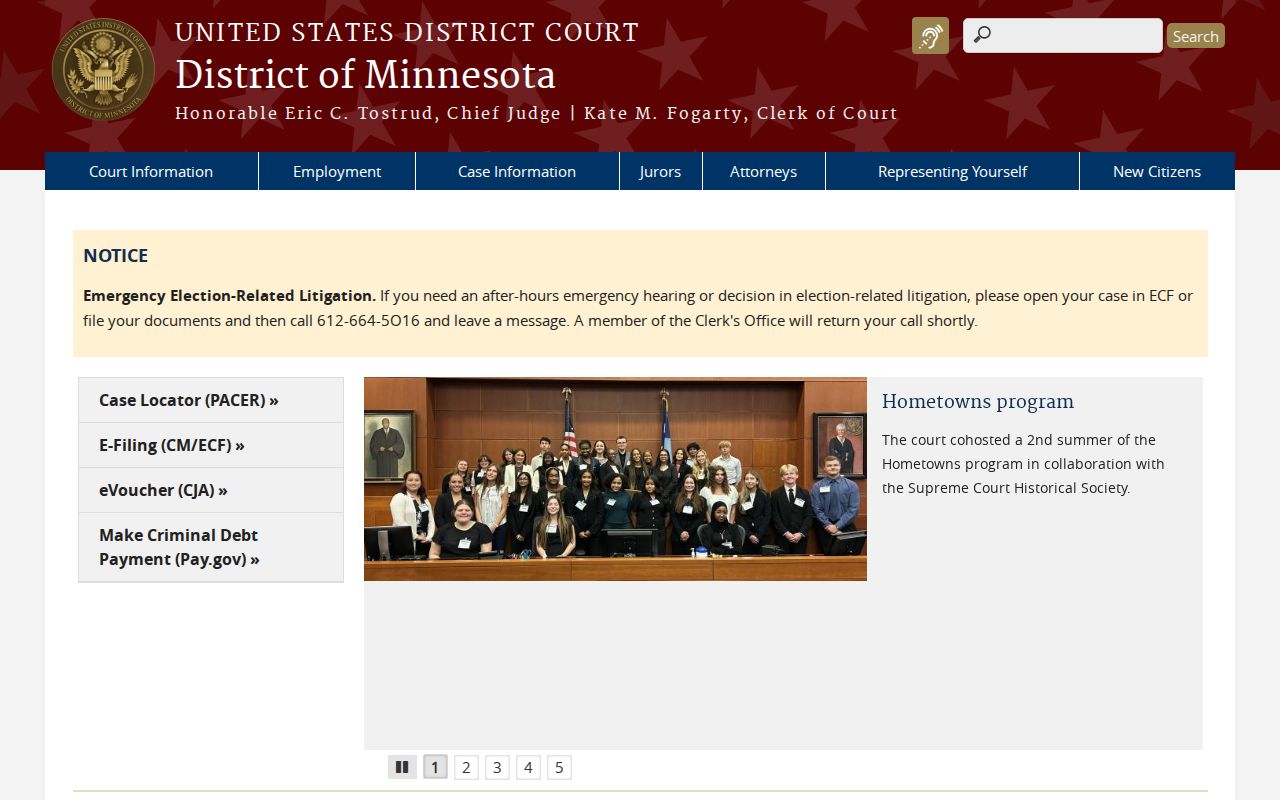
A federal warrant follows a separate process, so a clear Dakota County result never answers a federal question.
What to Do If There Is a Warrant for You
Confirm the order and read its conditions. Then weigh the paths. Voluntary surrender, a qualifying bail or bond payment, or a motion asking the court to recall or quash the warrant; an attorney should help choose among them. The county overview carries the same resolution steps with the surrender locations and a preparation list. Dakota County's posting bail instructions cover the weekday court counter and the after-hours jail lobby. Those pages also say what each step requires.
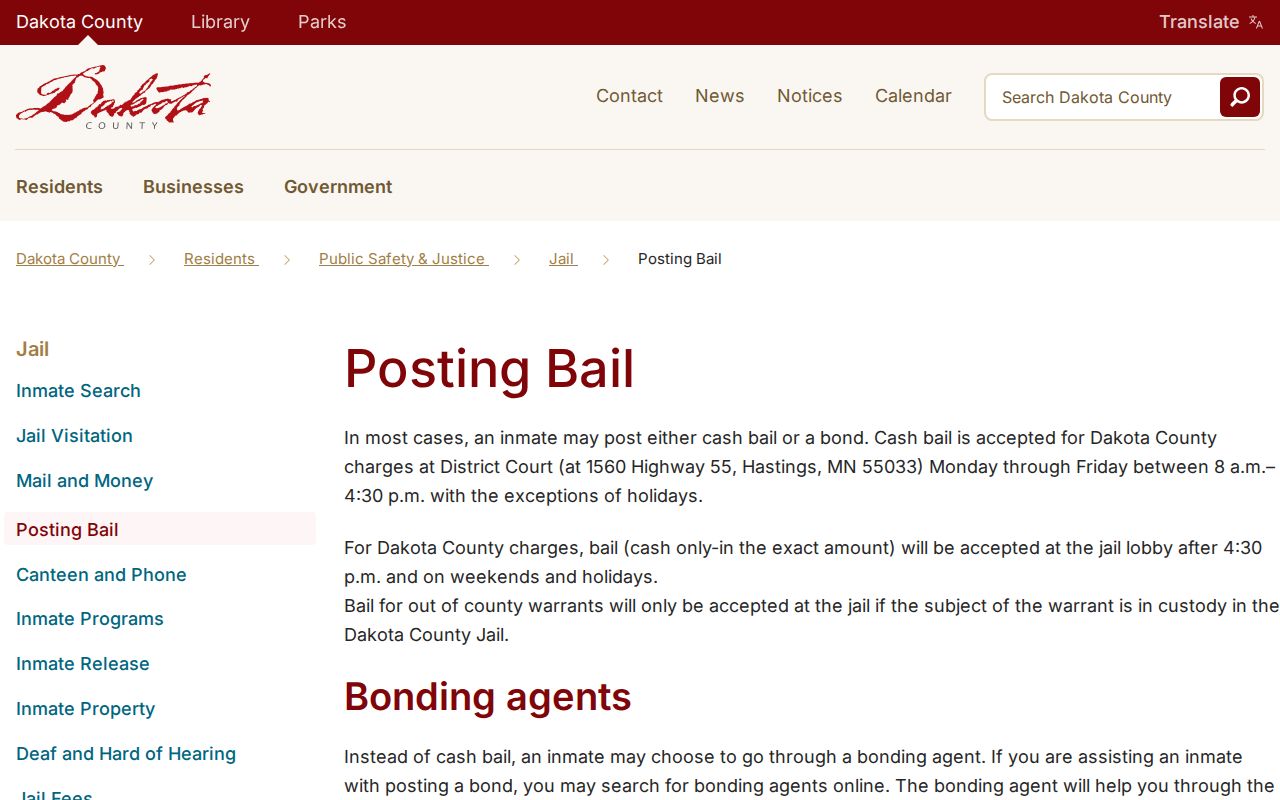
Cash bail at the exact amount is taken at the Dakota County jail lobby after hours and on weekends. A Body Only entry cannot be paid ahead.
Important: Talk with a lawyer before turning yourself in, because an arrest warrant can lead to custody at any traffic stop or contact with law enforcement.